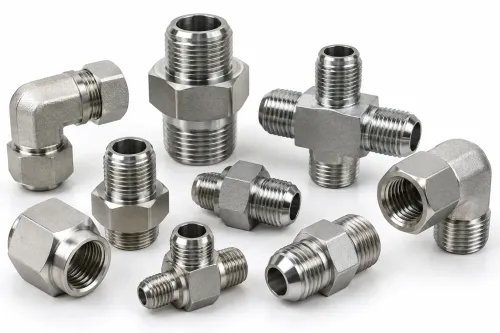


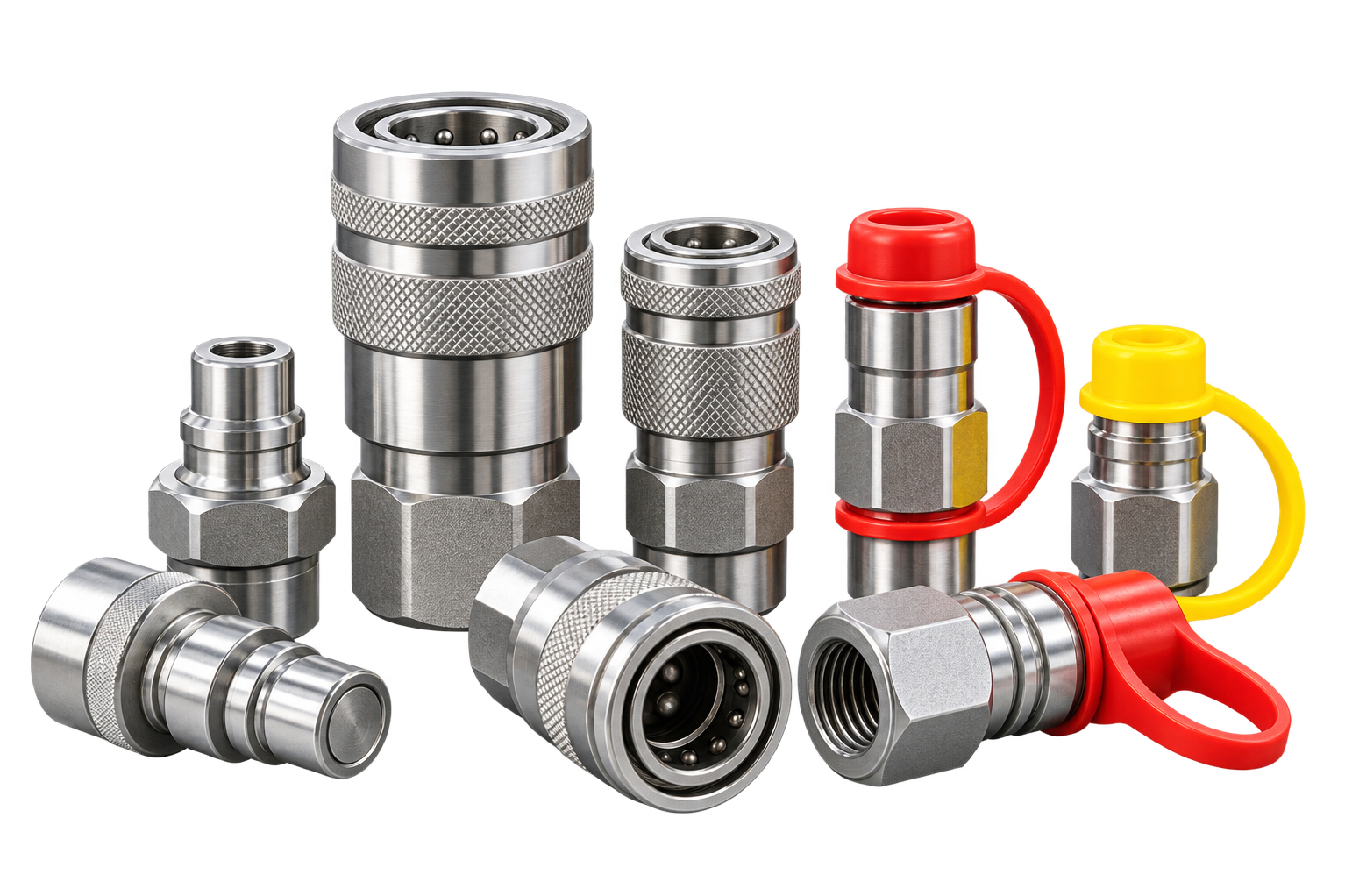
Hydraulic couplings may appear to be relatively small components, but incorrect selection can create significant operational problems. Leakage, incompatible connections, unsuitable pressure ratings, and difficult maintenance can all affect hydraulic systems. Evaluating a Hydraulic Couplings Supplier should therefore involve more than comparing unit prices.
For engineering businesses in Pimpri, Maharashtra, hydraulic components are commonly required in machinery, production equipment, material-handling systems, maintenance operations, and industrial assemblies.
Start With the Hydraulic Application
A coupling should be selected according to its actual working conditions.
Procurement teams need clear information about:
- Working pressure
- Maximum expected pressure
- Fluid compatibility
- Connection type
- Hose or tube dimensions
- Operating temperature
- Equipment movement
- Frequency of connection
- Environmental exposure
Without these details, selecting a coupling from appearance alone can result in compatibility problems.
Check Connection Compatibility Carefully
Hydraulic systems use multiple connection standards and thread types. Two fittings that look similar are not necessarily compatible.
Forcing mismatched connections together can damage threads, compromise sealing, and create leakage risks. Buyers should identify existing connection specifications before ordering replacement components.
Where identification is uncertain, technical measurements and equipment documentation can help.
Pressure Rating Needs Proper Attention
The selected coupling must be appropriate for the system's specified operating conditions.
It is also important to evaluate the hydraulic assembly as a whole. The system capability can be affected by its lowest-rated compatible component, so focusing only on one coupling's specification does not provide a complete assessment.
Consider Maintenance Requirements
Some industrial equipment needs hydraulic lines to be connected and disconnected regularly. Other systems remain assembled for long periods.
Where frequent disconnection is expected, factors such as ease of operation, contamination control, connection design, and maintenance practices become particularly important.
Dust caps and suitable protective practices may also help reduce contamination when compatible disconnected lines are exposed.
Evaluate Supplier Knowledge
A technically capable supplier should be able to discuss the application instead of simply identifying a part from a photograph.
Useful questions include whether the provider can help identify connection specifications, explain available configurations, check compatibility requirements, and provide related hydraulic components when needed.
Rahul Industrial Products serves engineering and manufacturing customers with requirements across industrial equipment and accessories. For hydraulic components, providing accurate system information can make supplier discussions more productive and reduce trial-and-error purchasing.
Look Beyond Initial Purchase Price
A low-cost coupling that does not match the system can result in replacement work, leakage, downtime, and repeated procurement.
A more useful purchasing decision considers specification accuracy, compatibility, expected service conditions, availability, and maintenance requirements together.
Hydraulic connections need precision. Choosing a supplier based on technical understanding and product suitability gives industrial teams a stronger basis for maintaining reliable hydraulic systems.