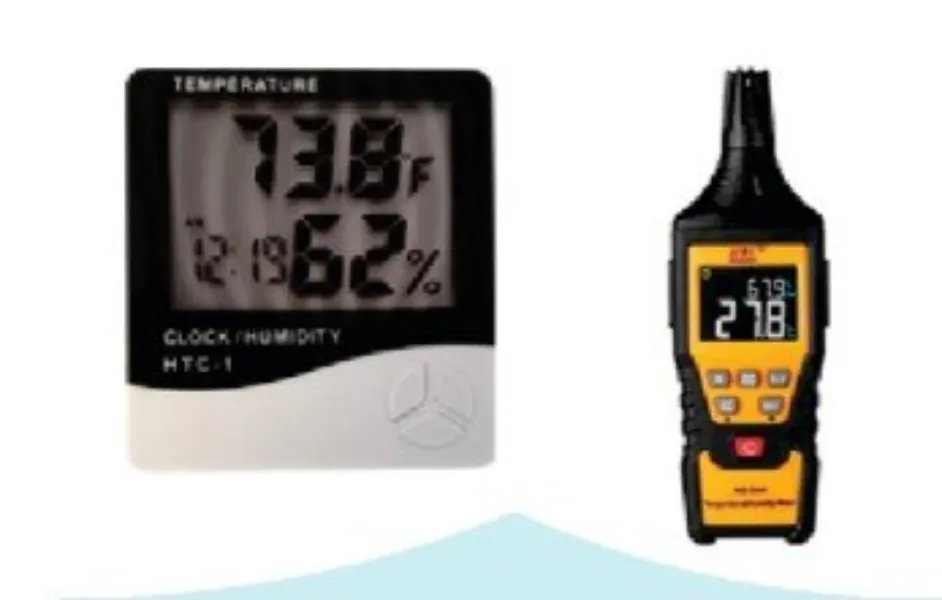
Humidity can influence product quality, material stability, storage conditions, coating performance, and several manufacturing processes. For industrial facilities, knowing the moisture level in the surrounding air is therefore more than a matter of comfort. A reliable Hygrometer supplier can help businesses select suitable instruments for monitoring relative humidity in production areas, warehouses, laboratories, coating sections, and controlled environments.
For manufacturing companies operating in Bhosari, Maharashtra, humidity monitoring can be particularly useful where raw materials, finished products, paints, chemicals, electronic components, and precision equipment need appropriate environmental conditions.
What Does a Hygrometer Measure
A hygrometer is an instrument used to measure humidity in the air. Many industrial models display relative humidity, while some instruments also measure temperature and other environmental parameters.
Relative humidity indicates how much moisture is present in the air compared with the maximum amount the air can hold at a particular temperature. This information can help teams understand whether environmental conditions are suitable for a specific process.
Industrial Applications of Hygrometers
Humidity measurement is relevant across different industrial activities. Common applications include:
- Paint application and coating areas
- Industrial storage facilities
- Quality control departments
- Laboratories and testing rooms
- Pharmaceutical and chemical environments
- Electronic component storage
- Surface preparation activities
- Manufacturing processes sensitive to moisture
In painting operations, for example, environmental conditions may influence coating application and curing. Monitoring humidity gives operators useful information before work begins.
Why Instrument Selection Matters
Not every hygrometer is designed for the same working environment. A basic instrument may be sufficient for general monitoring, while industrial teams may require greater measurement range, portability, response speed, durability, or accuracy.
Before selecting an instrument, buyers should consider the expected humidity range, operating temperature, frequency of measurement, working environment, display readability, calibration requirements, and required accuracy.
A procurement team should also determine whether measurements will be taken occasionally at different locations or continuously in a controlled area.
Good Measurement Practices Improve Reliability
Even a suitable instrument needs to be used correctly. Hygrometers should be handled according to manufacturer instructions and stored appropriately when not in use.
Measurement teams should avoid taking readings immediately after moving an instrument between environments with significantly different temperatures. Allowing the device to stabilise can help produce more representative readings.
Periodic calibration and verification are also important where humidity readings influence quality control procedures.
Building Better Process Awareness
Environmental monitoring can help maintenance and production teams identify conditions that may contribute to inconsistent results. Rather than treating humidity as an invisible variable, measurement makes it possible to document conditions and compare them with process requirements.
Rahul Industrial Products serves industrial customers looking for measuring instruments and related equipment. For engineering and manufacturing facilities, working with an experienced supplier can also make it easier to identify instruments appropriate for the intended application.
A hygrometer is a relatively simple measuring device, but its value comes from using the right instrument at the right stage of an industrial process. Understanding measurement requirements before purchasing helps businesses establish more consistent environmental monitoring practices.
Keywords