A blast setup can lose pressure, waste abrasive and extend cleaning time through a mismatched hose, worn nozzle, damp media or poorly adjusted recovery system. By the end, you will be able to connect each accessory to a measurable result and specify a setup that meets the required cleanliness, surface profile and production rate.
Key takeaways
- Match abrasive size and hardness to the required surface profile.
- Control hopper flow to prevent abrasive starvation and production stoppages.
- Replace worn nozzles before orifice growth reduces blasting pressure.
- Track pressure, abrasive use, cleaning time and nozzle wear together.
How the blasting line turns abrasive into usable cleaning power
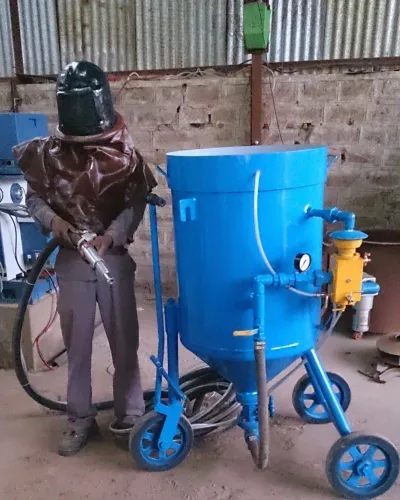
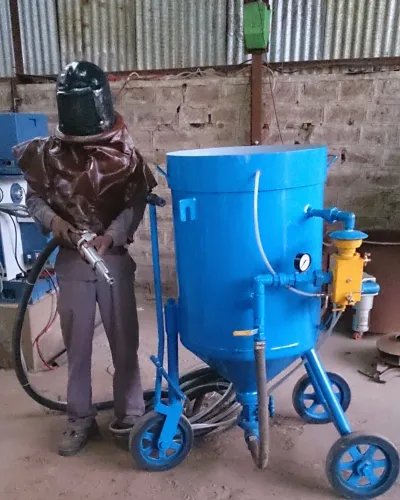
A blasting line converts stored abrasive and compressed air into a controlled stream that reaches the workpiece at usable pressure. Each connection affects the next: a restriction, leak, moisture problem or worn orifice reduces cleaning power before the operator sees the result.
- Abrasive storage keeps media available above the metering valve. A bridged or contaminated supply starves the line and creates uneven cleaning.
- Abrasive metering regulates how much media enters the air stream. Excess media lowers velocity and wastes material; too little leaves coating behind.
- The blast hose carries the mixture with minimal pressure loss. Its internal diameter should be roughly three to four times the nozzle orifice diameter.
- The nozzle holder secures the nozzle and seals the blast hose and nozzle connection. A leaking coupling lowers delivered pressure and increases idle time.
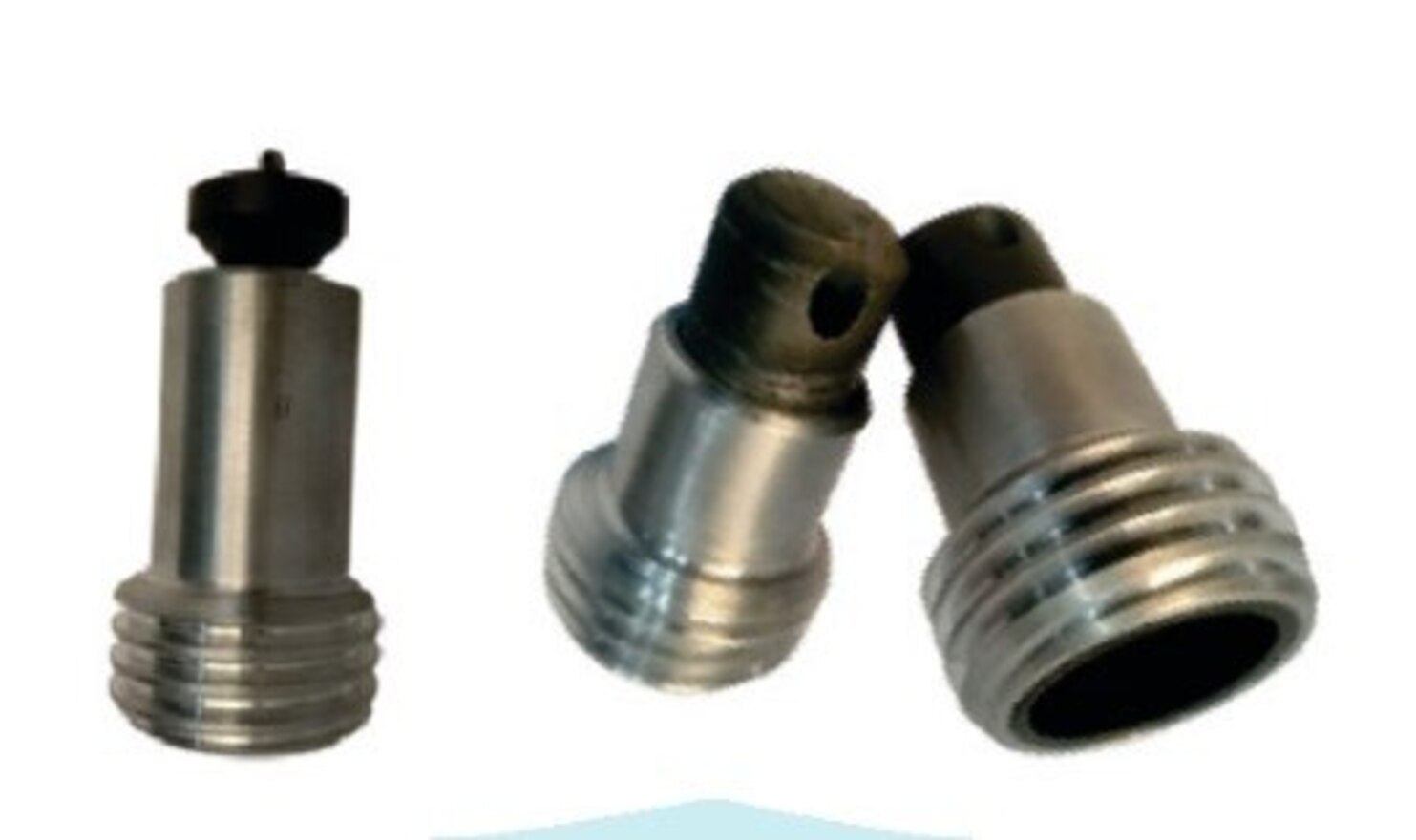
- The nozzle converts air pressure into a focused abrasive jet. Wear enlarges its bore, raising air and media consumption while reducing effective pressure.
- The workpiece receives the jet at the chosen distance and angle. Consistent movement turns that impact into an even cleanliness level and surface profile.
Keep the operator in control with a deadman control that stops abrasive flow when released; unsafe workarounds damage both productivity and safety. In a recovery system, separation returns usable media while removing fines, so the line does not recirculate dust or throw good abrasive into the collector.
How abrasive choice and hopper control prevent interruptions
Choose abrasive by the required surface profile, contamination risk and recovery system, not by cleaning speed alone. Match abrasive particle size and hardness to the coating manufacturer’s profile range: larger, harder media removes tightly bonded scale and creates a deeper profile, while smaller media reaches narrow features but can leave insufficient anchor pattern.
| Media | Cleaning and profile effect | Flow and operating consideration |
|---|---|---|
| Steel shot | Spherical impact; fast cleaning with a relatively rounded profile | Reuse in reclaim systems, but remove broken shot and fines before they overload the hopper |
| Steel grit | Angular cutting action; aggressive scale removal and deeper profile | Check wear and fines generation because degraded grit increases dust and unstable flow |
| Mineral abrasive | Useful for single-pass cleaning where recovery is limited | Screen for oversized particles and monitor dust; moisture quickly promotes bridging |
Keep compressed air dry at the blast pot. A water separator, aftercooler or air dryer must be checked at the point of use, because moisture can bridge abrasive in the metering valve, plug the nozzle and cause flash rust.
Set the hopper with a working-level alarm and refill before the low-level limit exposes the metering outlet. Use a clean, dry, screened charge; contamination, damp clumps and oversized particles interrupt flow. In reclaim equipment, adjust the separator to remove dust, fines and lightweight debris without throwing usable abrasive away.
Inspect hopper flow during production rather than waiting for a blockage.
Confirm the result with ASTM D4417 profile measurement. Excessive profile consumes coating; insufficient profile can weaken mechanical adhesion.
How hose, nozzle and holder specifications protect pressure and production rate
Pressure at the nozzle falls quickly when the line is undersized. Match the abrasive blasting hose internal diameter to roughly three to four times the nozzle orifice diameter; a narrow hose or excessive length adds restriction, so raising compressor output wastes energy without restoring equivalent nozzle performance.
| Nozzle choice | Production effect | Best fit |
|---|---|---|
| Boron carbide nozzle | Long wear life with aggressive abrasive; higher purchase cost | High abrasive throughput or expensive changeovers |
| Tungsten carbide nozzle | Lower initial cost, but faster wear in aggressive service | Lower-duty work and less aggressive media |
| Silicon carbide nozzle | Long service life with demanding abrasive duty | High utilisation where replacement downtime matters |
Select nozzle bore size for the compressor’s delivered air volume and the required cleaning rate, not simply for a larger blast pattern. A worn bore increases abrasive and air consumption while effective pressure drops. Inspect the orifice routinely.
A long-venturi internal geometry improves acceleration and coverage; a shorter geometry suits restricted access but sacrifices production rate. Set the nozzle angle to reach corners and complex surfaces without forcing the operator into an unstable posture.
Use a holder that seals the nozzle squarely and locks it without tools that delay changeover. A leaking coupling or holder steals pressure and throws abrasive into the work area. Keep the deadman control at the nozzle position; OSHA requires the operator to control abrasive flow there, preventing unsafe workarounds when a valve fails.
Enclose and ventilate silica-generating work, then select the required supplied-air respirator rather than relying on a dust mask.
How to measure whether accessories are making blasting more efficient
Run a controlled comparison on the same steel grade, contamination level and target cleanliness. Weigh abrasive loaded and recovered, record operating hours, and measure the area blasted so abrasive consumption per square metre is not confused with hopper usage.
| Measurement | How to record it | Evidence of improvement |
|---|---|---|
| Nozzle pressure | Measure pressure at the nozzle while blasting, not only at the compressor | Stable pressure shows the nozzle, hose and coupling are not wasting air |
| Cleaning rate | Record square metres accepted per productive hour | More accepted area without a lower cleanliness grade proves higher output |
| Abrasive consumption per square metre | Weigh new abrasive minus reusable recovered abrasive, then divide by accepted area | A lower figure shows less media loss and fewer fines |
| Downtime | Log minutes spent clearing blockages, repairing leaks and changing parts | Falling stoppage time proves the accessory setup is more reliable |
| Nozzle wear | Record orifice size and pressure at scheduled intervals | Replacement before excessive enlargement prevents rising air and abrasive use |
| Surface profile | Measure the ASTM D4417 surface profile at defined locations | The profile remains inside the coating manufacturer’s specified range |
Confirm cleanliness separately against the specified ISO 8501-1 grade, such as Sa 2½. Inspect dust and soluble salts with their respective test methods; a clean-looking surface does not prove either condition.
Compare results over several shifts, not one convenient panel. Reject an accessory change if it improves cleaning rate by producing excessive profile, because the coating consumes more material and the acceptance requirement is still missed.
How to build an accessory specification that holds up in daily production
Write the specification as a production-control document, not a catalogue request. Set acceptance limits before asking for prices: cleanliness, profile, output, pressure, dust, moisture and allowable downtime.
1. Define the result: require ISO 8501-1 Sa 2½, the target surface profile in micrometres, cleaning rate in square metres per hour, and maximum abrasive consumption per square metre. Keep profile and cleanliness as separate acceptance criteria.
2. Specify inspection: use ISO 8502-6 and ISO 8502-9 for soluble ionic contamination, and the ISO 8502-3 dust test after blasting. State the pass limits, test frequency and required records; clean-looking steel can still cause coating failure.
3. Write wear limits for the nozzle, hose, holder, coupling, metering valve and deadman control. Include the replacement trigger, spare quantity, inspection interval and leak-test method. A worn nozzle increases air and abrasive cost, while a leaking coupling reduces delivered pressure.
4. State air quality at the nozzle, including moisture control through a separator, aftercooler or dryer. Require checks at the point of use because wet abrasive bridges, plugs nozzles and promotes flash rust.
5. Specify recovery airflow, dust-collector performance and housekeeping time. Balance recovery so spent media leaves the floor without carrying usable abrasive into the collector. Ask Rahul Industrial Products to quote compatible hopper, holder and control components with consumables and service intervals itemised; compare total cost per square metre, not purchase price alone.
Related products
 | Blasting Equipment Supplier in PCMC – Rahul Industrial Products Rahul Industrial Products is a leading distributor, dealer, and supplier of high-quality Shot Grit in... View product → |
 | Blasting Equipment Supplier in India – Rahul Industrial Products Rahul Industrial Products is a trusted leading distributor, dealer, and supplier of high-quality... View product → |
Frequently asked questions
How do shot blasting accessories affect surface preparation efficiency?
Hoses, couplings, nozzles, holders and abrasive controls determine whether compressed air and abrasive reach the workpiece at usable pressure and flow.
How do abrasive choice and hopper control prevent interruptions?
Select abrasive size and hardness for the required cleaning and profile, then maintain consistent hopper flow to prevent starvation, bridging and stoppages.
When should you replace a blast nozzle?
Measure the orifice and replace the nozzle when wear increases its diameter enough to reduce pressure, abrasive control or production rate.
How can you measure whether accessories improve blasting efficiency?
Compare usable pressure, abrasive consumption, cleaning time, coverage, rework, stoppages and nozzle wear before and after the change.
Related products
 | Blasting Equipment Supplier in India – Rahul Industrial Products Rahul Industrial Products is a trusted leading distributor, dealer, and supplier of high-quality... View product → |
 | Blasting Equipment Supplier in India – Rahul Industrial Products Rahul Industrial Products is a leading distributor, dealer, and supplier of high-quality Internal... View product → |
 | Blasting Equipment Supplier in India – Rahul Industrial Products Rahul Industrial Products is a leading distributor, dealer, and supplier of high-quality blasting hoses... View product → |