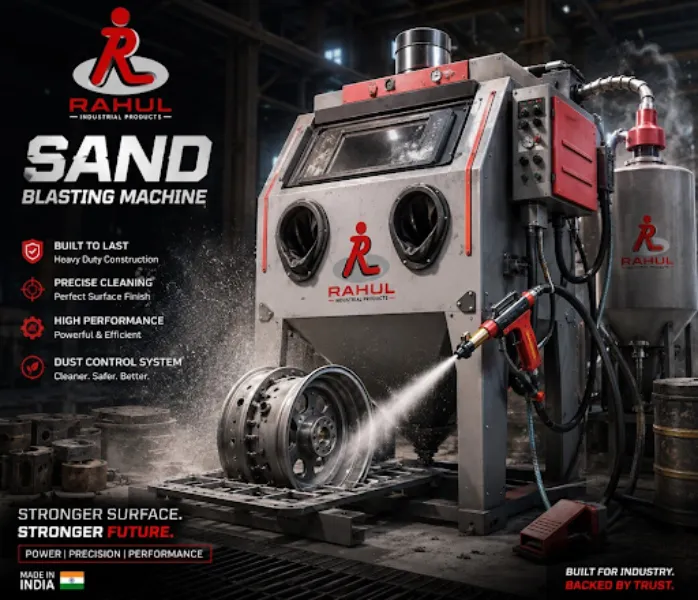
Surface preparation has become an essential process in modern manufacturing. Before painting, coating, welding, or repairing metal components, surfaces must be cleaned thoroughly to achieve reliable results. A sand blasting machine remains one of the most effective solutions for removing rust, scale, paint, and contaminants from industrial components.
Across Bhosari, one of Maharashtra's major industrial hubs, manufacturers use abrasive blasting to improve production quality, extend equipment life, and prepare materials for demanding industrial applications.
What Does a Sand Blasting Machine Do?
A sand blasting machine propels abrasive media at high speed to clean or prepare surfaces. Although various abrasives are used today, the basic principle remains the same—high-pressure abrasive particles remove unwanted surface material efficiently.
Blasting improves surface texture, allowing coatings and paints to bond more effectively.
Common blasting media include:
- Garnet
- Steel grit
- Glass beads
- Aluminum oxide
- Copper slag
- Steel shot
The choice depends on the material being treated and the desired finish.
Common Industrial Applications
Modern manufacturing depends on blasting for numerous operations.
Typical applications include:
- Rust removal
- Paint stripping
- Surface roughening
- Weld cleaning
- Structural steel preparation
- Equipment refurbishment
- Pipeline maintenance
- Automotive component cleaning
These processes improve product durability while reducing coating failures.
Benefits for Manufacturing Companies
A quality blasting machine offers several operational advantages.
Faster Surface Preparation
Large surfaces can be cleaned much more quickly compared to manual methods.
Better Coating Performance
Proper surface profiling improves paint adhesion and coating life.
Improved Equipment Reliability
Removing corrosion before repairs helps extend machinery lifespan.
Consistent Surface Finish
Uniform blasting produces predictable finishing results across production batches.
Reduced Manual Labor
Automated blasting reduces physical effort while increasing productivity.
Factors to Consider Before Buying
Choosing the right machine depends on production requirements.
Important considerations include:
- Production volume
- Workpiece size
- Abrasive recovery system
- Air compressor capacity
- Dust collection requirements
- Maintenance accessibility
Industrial buyers should also evaluate spare part availability and technical support.
Safety Remains Essential
Even the best blasting equipment requires proper operating procedures.
Operators should always use:
- Blasting helmets
- Respiratory protection
- Protective clothing
- Safety gloves
- Hearing protection
Regular equipment inspections also reduce the risk of unexpected failures.
Supporting Long-Term Performance
Routine maintenance includes:
- Checking blast hoses
- Inspecting nozzles
- Monitoring pressure settings
- Cleaning moisture separators
- Replacing worn valves
Preventive maintenance minimizes production interruptions and extends equipment life.
Many manufacturing businesses in Bhosari rely on suppliers that understand industrial surface preparation requirements rather than simply supplying machinery. Companies like Rahul Industrial Products assist engineering industries by offering blasting systems along with welding equipment, industrial gas equipment, painting systems, and inspection tools that complement modern manufacturing operations.
Selecting the appropriate sand blasting machine ultimately improves efficiency, product quality, and operational reliability while supporting consistent industrial production.
Keywords