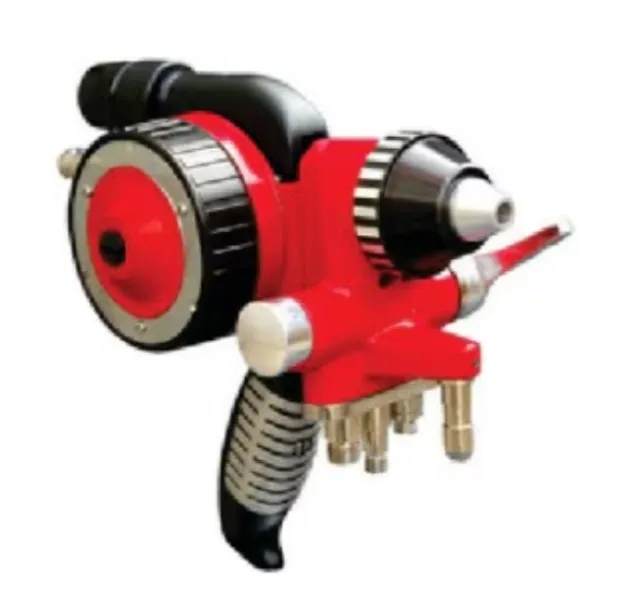
A spray gun influences coating atomisation, transfer, pattern control, and the operator's ability to achieve a consistent finish. When businesses evaluate a Spray Gun Supplier, the discussion should therefore extend beyond the price of the gun itself.
Painting teams in Chinchwad, Maharashtra, may work with primers, finishes, protective coatings, and other suitable materials across fabricated components and industrial products. Different jobs can require very different spray equipment.
Understand the Coating First
The material being sprayed is one of the first selection factors.
Coatings differ in viscosity, solids content, application recommendations, and required film characteristics. The spray gun, nozzle, air cap, fluid setup, and pressure arrangement need to suit the material and the manufacturer's application guidance.
Buying a spray gun without identifying the coating can lead to unnecessary adjustments later.
Consider the Required Finish
Not every industrial painting job has the same finish requirement.
A visible fabricated product requiring a refined appearance may need different spray characteristics from a large structural component receiving a protective coating.
Teams should define the desired finish, production speed, component geometry, and coating specification before comparing equipment.
Review Production Volume
Frequency of use matters as much as finish quality.
For occasional maintenance painting, priorities may include simplicity and easy cleaning. For repeated production work, durability, consistent adjustment, operator comfort, and availability of replacement parts may become more significant.
Industrial procurement teams should therefore describe typical daily usage rather than selecting equipment solely from catalogue specifications.
Look at Supporting Components
A spray gun does not operate independently. Depending on the painting system, related requirements may include:
- Suitable air supply
- Pressure regulation
- Fluid containers
- Hoses
- Filters
- Nozzle sets
- Cleaning accessories
- Replacement seals and components
Compatibility across the system helps maintain predictable operation.
Avoid Common Buying Mistakes
One frequent mistake is selecting equipment based only on purchase price. Another is assuming that a single spray gun configuration will handle every coating equally well.
Using unsuitable nozzle sizes, ignoring air requirements, and overlooking replacement-part availability can also create problems.
Rahul Industrial Products supplies industrial painting equipment alongside other manufacturing accessories. A useful supplier conversation should cover the coating material, application method, workload, finish expectations, and available utilities before a product is selected.
Think About Long-Term Usability
Spray equipment requires cleaning and periodic maintenance. Coating residue can affect passages, nozzles, needles, and other components when equipment is not maintained correctly.
Buyers should understand recommended cleaning procedures and determine whether commonly required service parts can be sourced when needed.
Selecting the right spray gun is ultimately about matching equipment to the coating process. When application requirements are clearly defined, businesses can compare options more meaningfully and build a painting setup that supports consistent day-to-day work.
Keywords