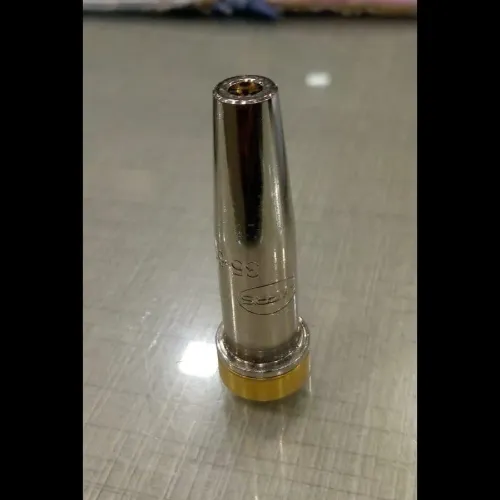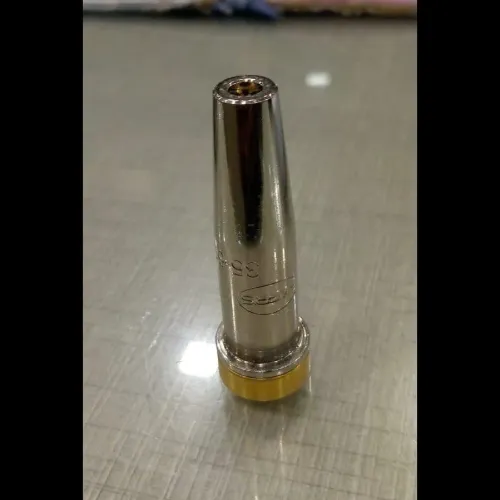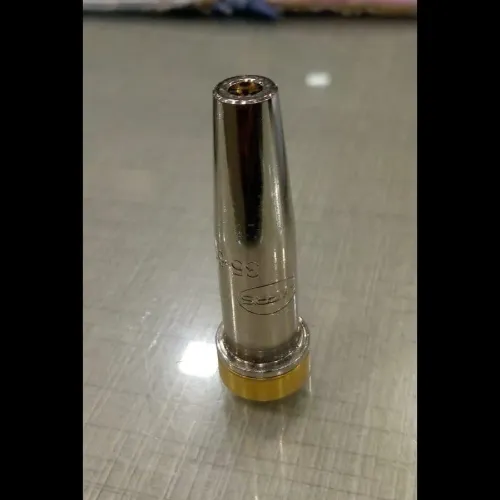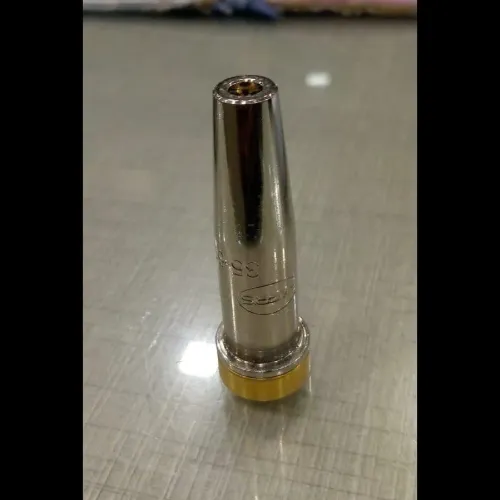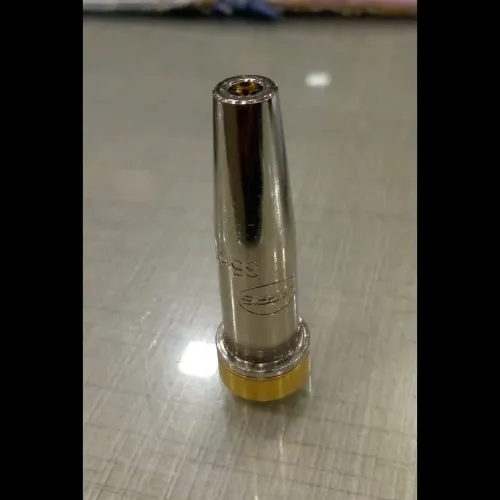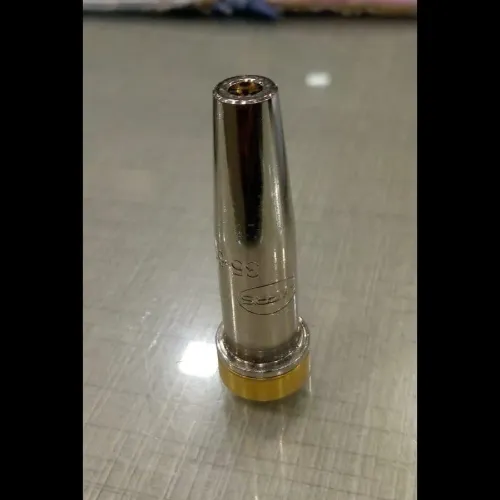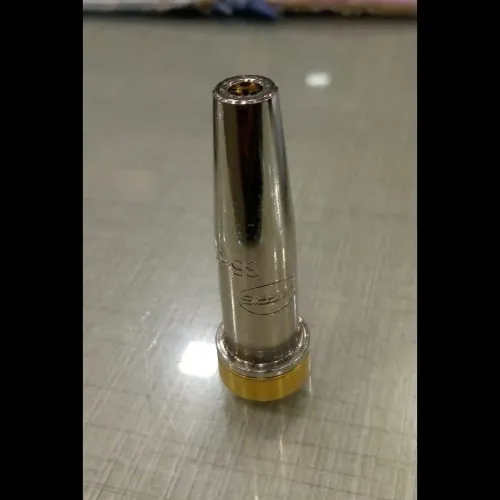
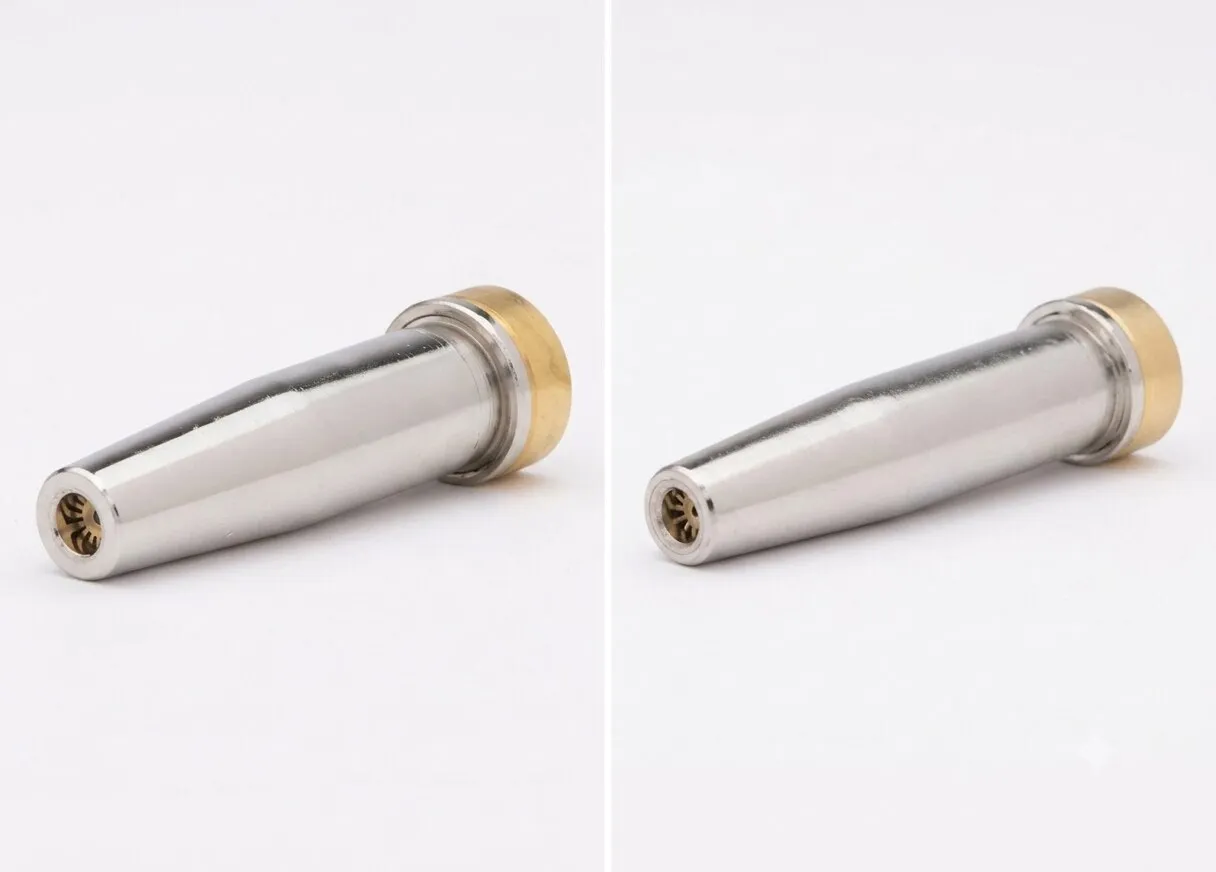
A 6290 tip can fit a torch and still be wrong for the fuel, mixer, pressure range or plate thickness. By the end, you will be able to distinguish the NFF and VVC flame patterns, select the correct operating chart, confirm torch compatibility and set up a cut without relying on appearance alone.
Key takeaways
- NFF is for natural gas; VVC is for propane or LP gas.
- Match nozzle size to fuel, pressure and the steel thickness.
- Confirm torch head, seat, thread and mixer compatibility before ordering.
- Purge safely, preheat fully and check flame shape before cutting.
What NFF and VVC mean on a Harris 6290 nozzle
The letters after 6290 identify the fuel-gas pattern, not a size or performance grade. A Harris 6290 NFF is the natural-gas cutting tip; a Harris 6290 VVC is the propane or LP-gas cutting tip.
| Model | Fuel pattern | Physical identifying feature | What the suffix identifies |
|---|---|---|---|
| Harris 6290 NFF | Natural gas | Fuel passages and preheat orifices are arranged to produce a natural-gas preheat flame | NFF is Harris’s natural-gas pattern designation |
| Harris 6290 VVC | Propane or LP gas | The preheat orifices and fuel passages are configured for propane’s different flame and oxygen requirements | VVC is Harris’s propane/LP pattern designation |
Both tips are oxy-fuel cutting nozzles. Each has a central cutting-oxygen passage surrounded by fuel-specific preheat orifices, but the orifice drilling and flame pattern are not the same. That physical difference controls ignition, fuel flow, flame stability and the heat delivered ahead of the cut.
Do not treat the two suffixes as interchangeable because the tips look similar or fit the same torch head. A natural-gas setting on a VVC tip can give an unstable or inefficient flame, while propane used through an NFF tip can cause poor heating and excessive gas consumption.
Check the Harris tip chart and torch instructions before fitting either nozzle; the suffix identifies intended fuel service, not universal compatibility with every 6290 torch setup.
Fuel, pressure and thickness determine the correct 6290 size
A 6290 size comes from the Harris material-thickness and cutting-speed chart for that exact nozzle and fuel. Do not select it from the torch regulator size, outside diameter, or a different manufacturer’s “size 3” label.
| Nozzle | Fuel-gas compatibility | Settings and chart to use |
|---|---|---|
| 6290 NFF | Use only the natural-gas or alternative-fuel gases named in the Harris NFF chart; do not substitute acetylene settings. | Set fuel-gas pressure, oxygen pressure and cutting-oxygen pressure from the NFF thickness chart. |
| 6290 VVC | Use only the propane, LPG, natural-gas or other fuels specifically listed for the VVC and torch combination. | Use the VVC thickness chart; its pressure values are not interchangeable with NFF values. |
Set the preheat flame for the fuel. A flame copied from an acetylene setup can become oxidizing or fuel-rich, producing slag, a rounded top edge and slow piercing.
Check cutting-oxygen pressure under flow, with the cutting lever fully depressed. A regulator gauge reading with the lever released can overstate the pressure at the tip because the hose, valve, passages and regulator lose pressure during flow.
Use the chart’s thickness range and cutting speed together. A larger tip will not rescue inadequate preheat capacity, while a smaller tip operated beyond its chart range can produce a narrow, unstable jet and an incomplete cut.
Confirm the chart matches the torch series, mixer and fuel service before ordering. Add the specified check valves and flashback protection; correct pressure settings alone do not prevent reverse flow or flashback.
Where each nozzle performs best—and where it struggles
Choose the fuel system and available preheat capacity before choosing by nominal plate thickness. VVC suits acetylene work where rapid preheating, clean piercing and a quick start matter; NFF suits natural-gas, propane or similar fuel-gas systems when you can supply the longer preheat those gases require.
| Job | Better starting choice | What can limit it |
|---|---|---|
| Straight cuts | NFF for fuel-gas production cutting; VVC for acetylene work | Excessive speed leaves drag and uncut webs; excessive dwell widens the kerf |
| Bevel cuts | Either, matched to the approved fuel and thickness chart | Poor stand-off or a damaged oxygen orifice increases taper and spoils the bevel angle |
| Scrap removal | NFF when long-duration fuel-gas cutting is practical; VVC when quick acetylene starts reduce handling time | Heavy dross results from weak preheat, poor flame adjustment or slow travel |
| Piercing heavy plate | VVC when acetylene and adequate oxygen capacity are available; NFF only with sufficient preheat capacity | A cold, slow preheat can produce a wandering pierce or fail to break through |
NFF is not automatically the better choice for thick plate. If the fuel-gas mixer, regulator or supply cannot deliver enough preheat, thickness beyond the chart’s practical range will produce delayed starts and ragged cuts. VVC also struggles when its thickness rating is exceeded or oxygen flow falls during piercing.
Keep the tip close enough to maintain the designed flame pattern without touching the plate. Clean, concentric preheat holes and a central cutting orifice matter as much as pressure; spatter or carbon can turn a suitable nozzle into a poor-cutting one.
How to verify torch fit before ordering a 6290 nozzle
A 6290 tip that screws onto the torch is not automatically a safe match. Confirm the complete assembly: torch series, Harris torch body, mixer and torch head, seating arrangement, thread or retaining nut, and fuel-gas service.
1. Read the identification stamped on the torch body and head. Record the exact series, model and manufacturer; do not rely on the tip’s outside diameter or the regulator connection.
2. Open the manufacturer’s compatibility chart for that torch series. Confirm that it lists 6290-NFF or 6290-VVC for your specific head and mixer, rather than listing only a similar-looking 6290 tip.
3. Compare the tip seat and thread with the drawing or parts diagram. Check the seat angle, locating shoulder, thread size and pitch, and whether the tip is held by a nut, gland or threaded head. A partial thread engagement can leak or misalign the preheat ports.
4. Match the fuel pattern to the mixer. NFF is intended for natural gas; VVC is intended for propane or LP gas in Harris charts. Do not substitute one because the thread fits.
5. Verify the torch’s approved fuel, oxygen passages and operating chart, including the required tip size for your plate thickness. Ask the supplier to confirm the torch model and tip part number in writing.
Rahul Industrial Products can use the torch model, head marking and existing tip details to check the catalog match before you order, which is more reliable than measuring the old nozzle alone.
The correct setup, cutting sequence and fault checks
A safe, repeatable cut depends on sequence as much as pressure. Install the fuel-specific nozzle with the correct mixer and head, then complete this order:
- Inspect hoses, regulators, connections, check valves and specified flashback protection. Leak-test every joint with approved leak-detection solution; never use a flame.
- Seat the nozzle squarely in the torch head and tighten it to the equipment instructions. A nozzle that looks fitted but leaks at its seat will distort the flame.
- Clean each preheat and cutting orifice with the correct tip cleaning drills. Do not enlarge an orifice by forcing an oversized drill through it.
- Open the cylinder and torch valves gradually, then set the specified fuel and oxygen pressures. Perform the preheat flame adjustment for the actual fuel; do not copy an acetylene flame onto a propane or natural-gas setup.
- Hold the nozzle at the specified stand-off and preheat until the plate reaches ignition temperature. Propane and natural gas usually need more time, especially on heavy plate.
- Set the piercing distance, start cutting oxygen, and wait for a clean breakthrough before moving. Maintain the recommended cutting speed; excessive speed leaves webs, while excessive dwell widens the kerf and increases dross.
- Release the cutting oxygen, close the fuel valve, close preheat oxygen, shut the cylinders, and bleed both lines in the equipment’s specified shutdown order.
Poor cuts reveal the cause: irregular drag lines suggest speed or distance errors, rounded tops indicate excess heat, and heavy bottom dross points to poor oxygen delivery, dirty orifices, wrong fuel-tip selection, or contaminated plate.
Frequently asked questions
What do NFF and VVC mean on a Harris 6290 nozzle?
NFF identifies the natural-gas cutting pattern. VVC identifies the propane or LP-gas cutting pattern.
How do you choose the correct Harris 6290 nozzle size?
Select the size using the fuel gas, recommended oxygen and fuel pressures, and the steel thickness you need to cut.
Where do Harris 6290 NFF and VVC nozzles perform best?
The NFF pattern suits natural-gas cutting, while the VVC pattern suits propane or LP-gas cutting. Each struggles when used with the wrong fuel or outside its pressure and thickness range.
How do you verify that a Harris 6290 nozzle fits your torch?
Check the torch model, nozzle seating method, thread or connection, mixer arrangement and the manufacturer’s compatibility information before ordering.
What is the correct setup and cutting sequence for a Harris 6290 nozzle?
Inspect and purge the equipment, install the nozzle correctly, set the specified pressures, adjust the preheat flame, pierce or start from an edge, and use the cutting oxygen lever while checking the cut and flame.