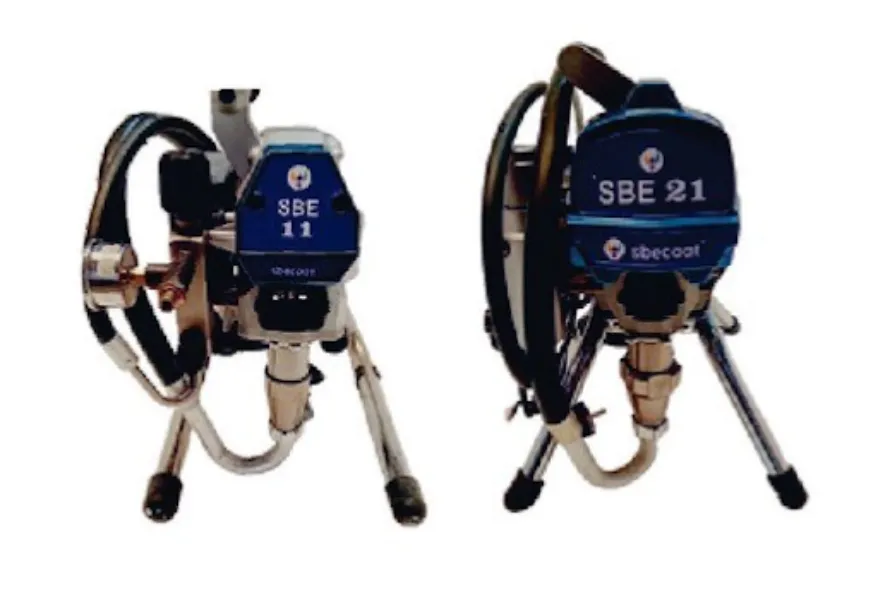
Industrial painting involves much more than applying colour to a surface. Coating thickness, surface preparation, paint viscosity, spray pressure, operator technique, and equipment selection can all influence the finished result. Choosing equipment through an experienced Airless Paint Sprayer dealer can help industrial users understand which spraying system is suitable for their workload.
For fabrication units and engineering companies in Pimpri, Maharashtra, airless spraying is commonly considered when larger surfaces or regular coating operations make conventional application methods less practical.
How Airless Paint Spraying Works
An airless paint sprayer uses high pressure to force coating material through a specially designed spray tip. Unlike conventional air-assisted spraying, the coating is atomised primarily through fluid pressure.
This method can support rapid coating of suitable surfaces and is commonly used for industrial structures, fabricated components, machinery, equipment, tanks, and similar applications.
Where Airless Sprayers Can Be Useful
Industrial users may consider airless equipment when painting:
- Structural steel
- Fabricated assemblies
- Machinery frames
- Storage tanks
- Large metal components
- Industrial structures
- Equipment bodies
- Suitable protective coating surfaces
The actual sprayer configuration should always match the coating material and application requirement.
Understanding Pressure and Flow Requirements
Selecting an airless sprayer based only on maximum pressure can be misleading. Buyers should also consider expected material flow, coating viscosity, spray tip compatibility, hose requirements, duty cycle, and the size of the surfaces being coated.
A unit used occasionally for relatively small components may have different requirements from equipment operating regularly in a fabrication facility.
The coating manufacturer's recommendations should also be checked before selecting tips, pressure settings, and spraying parameters.
Spray Tips Play an Important Role
The spray tip influences both the spray pattern and the amount of coating delivered. An unsuitable tip can affect application efficiency and finish quality.
Tip wear also deserves attention. As a tip wears, its opening can change, potentially increasing material consumption and altering the spray pattern. Regular inspection therefore forms part of responsible equipment maintenance.
Maintenance Should Be Considered Before Purchase
Paint spraying equipment works with materials that can dry, settle, or build up inside components. Cleaning procedures should therefore be considered before selecting a system.
Operators need to understand appropriate flushing practices, filter inspection, tip maintenance, hose condition checks, and safe pressure-release procedures.
Availability of compatible consumables and replacement components can also influence long-term usability.
Matching Equipment With Actual Workload
Rahul Industrial Products supplies industrial equipment for businesses with varied painting and surface-treatment requirements. A useful equipment discussion should begin with the coating material, component size, frequency of use, expected finish, and working environment rather than simply recommending a high-capacity machine.
For industrial buyers, the best airless spraying system is not necessarily the largest unit available. It is one that can handle the intended coating, workload, and operating conditions while remaining practical to maintain. Evaluating these factors early can support more efficient and consistent painting operations.
Keywords