A low-priced spray gun is not a good purchase if the dealer cannot identify the exact nozzle, needle, air cap, pressure range and spare parts behind the quote. By the end, you will be able to verify Ashoka dealership claims, match the gun to your coating and compressor, test the proposed setup, and judge whether the dealer can keep it working after installation.
Key takeaways
- Ask for proof of Ashoka authorisation before comparing prices.
- Match nozzle, air cap and fluid setup to your coating.
- Test the complete spray system, not the gun alone.
- Confirm spare parts availability and local service response times.
Verify Ashoka authorisation before comparing prices
Do not compare an Ashoka spray gun dealer’s price until you have confirmed that the seller is an authorised Ashoka dealer and that the quoted equipment can be traced to the manufacturer.
1. Ask for a current authorisation letter, dealership certificate or channel-partner document showing the dealer’s legal name, Ashoka product scope and validity period. Contact Ashoka through independently verified details, not only the phone number printed on the quotation, and confirm the dealer’s dealership validity.
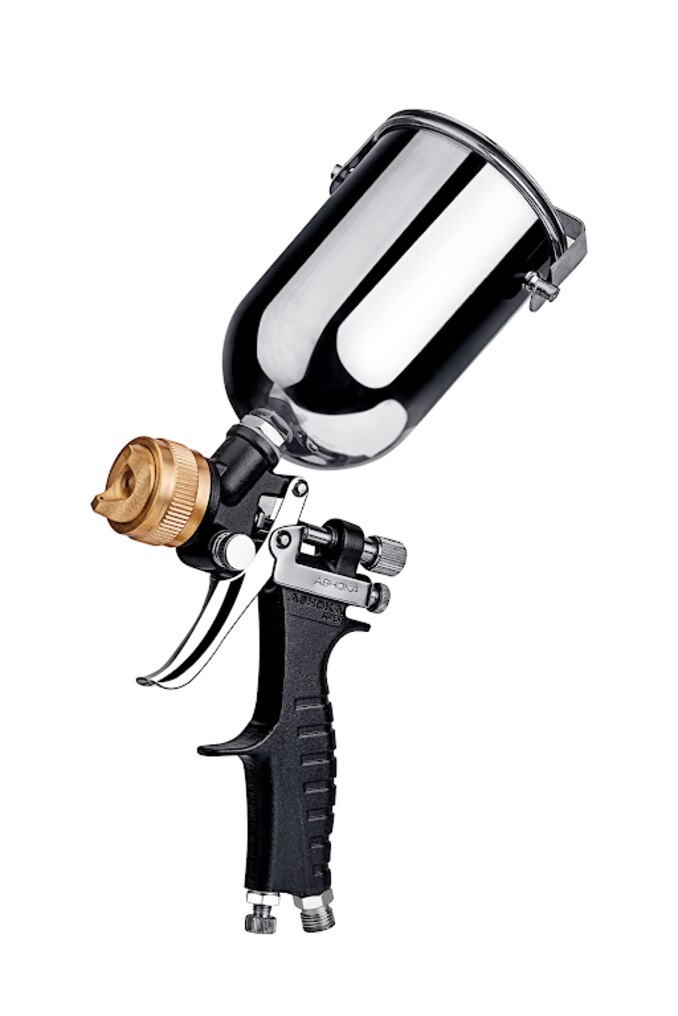
2. Require a quotation that identifies the exact gun model and complete configuration: fluid nozzle or tip, needle, air cap, seals, feed arrangement and pressure regulator. “Ashoka spray gun” alone is not enough; mixed parts from different gun families can cause leakage, poor shutoff or different atomisation.
3. Ask how the supplied gun will be traced. The invoice should show the model, serial number where provided, manufacturer part numbers and warranty terms. Request confirmation that replacement nozzles, needles, packings and filters are genuine, compatible parts.
4. Get manufacturer support stated in writing, including warranty handling, technical guidance, repair responsibility and escalation contact. A low price has little value if the seller cannot obtain parts or honour a defect claim.
Reject a quotation that offers only a catalogue photograph, vague “original” wording or an unexplained substitute model. Compare prices only after the specifications, warranty route and traceability match.
Match the gun configuration to your coating and finish
Choose the feed arrangement and nozzle for the coating’s viscosity, required finish and hourly output—not for the brand name on the paint tin. An Ashoka spray gun model is suitable only when its fluid tip, needle, air cap, seals and regulator are specified as a matched configuration.
| Feed arrangement | Best fit | Production implication |
|---|---|---|
| Gravity-feed spray gun | Small batches, colour changes and fine finishes | Low material waste, but limited cup capacity |
| Suction-feed spray gun | General-purpose work with moderate output | Larger container options, with greater air demand |
| Pressure-feed spray gun | High-viscosity coatings, long shifts and high flow | Consistent delivery, provided the pot or pump, regulator, agitator and hose are sized together |
Start with the coating’s viscosity at application temperature, solids content and target flow. A 1.3 mm or 1.4 mm nozzle suits many thin-to-medium coatings and fine finishes; a 1.7 mm tip suits heavier primers and thicker materials, while high-solids or heavily filled coatings may need a larger tip and higher fluid capacity.
Confirm the pressure range and air consumption in L/min or CFM.
Do not accept “HVLP” or “LVMP” as the whole specification. Ask for the air-cap pressure, fluid pressure, spray distance, hose length, substrate and film build used in the test. Require a demonstration with your coating, or a documented equivalent; a thin substitute can hide orange peel, dry spray, poor edge coverage and inadequate production rate.
Check the complete air, fluid and hose system
A compressor’s horsepower or receiver size does not prove that the gun will hold atomizing pressure during continuous spraying. Compare the gun’s air consumption L/min and CFM at its specified operating pressure with the compressor free-air delivery, then add capacity for simultaneous users, filter losses and peak demand.
The proposed system must state the pressure at the gun while spraying, not only the regulator setting at rest. Record the hose internal diameter and length: a narrow, long hose creates pressure drop and restricts flow. Confirm that the regulator, tank or pump, fluid hose and agitator can deliver the required fluid pressure without pulsing.
For a pressure-feed setup, require a written system schedule containing:
- Gun inlet pressure and fluid-pressure range measured during spraying
- Compressor free-air delivery at the stated pressure, with the reserve for other air users
- Hose internal diameter and length for both air and fluid lines
- Regulator, tank or pump capacity, agitator speed and fluid-flow rate
- Filter and dryer locations, element ratings and maximum acceptable pressure drop
Specify compressed-air cleanliness by ISO 8573-1 for particles, water and oil. A filter upstream of the gun is not enough if contaminated piping or hose adds oil or moisture downstream. Test pressure and flow at the gun with the actual hose, filter and coating connected; a satisfactory reading at the compressor outlet proves little.
Use a documented demonstration and inspect the supplied gun
Accept the gun only after a documented demonstration using your actual coating, or an equivalent with recorded viscosity and solids. Use the quoted nozzle, air cap, hose length, pressure, substrate and target film build; a water-thin substitute can hide dry spray, orange peel, poor edge coverage and an inadequate production rate.
Record these acceptance checks:
- Spray-pattern testing: inspect fan uniformity, edge coverage, atomisation, overspray and shutoff. Test the zinc-rich primer and two-component coatings separately; one successful material does not prove the gun suits both.
- Measure inlet pressure and air consumption at the gun, not only at the compressor. Specify ISO 8573-1 particle, water and oil classes, point-of-use filtration and allowable pressure drop; downstream hose contamination can defeat an upstream filter.
- Compare the wet-film or dry-film reading with the job target and record material used, nozzle, pressures, distance, gun angle, overlap and operator.
- Inspect the supplied gun against the quotation: exact model, fluid nozzle, needle, air cap, seals, feed arrangement and regulator must match. Check threads, cup, trigger, fluid passages and seals for damage, contamination, leakage and clean shutoff.
- Check guards, hose connections and grounding. If solvent creates a hazardous atmosphere, request conformity documentation for the gun, pumps, controls, lighting and electrostatic equipment.
- Do not treat low overspray as respiratory protection. A required respirator program includes medical evaluation and fit testing before use, annually, and after a different facepiece.
| Test result | Accept | Reject |
|---|---|---|
| Pattern | Even fan and target film build | Tails, dry spray or uneven edges |
| Leakage | No fluid or air leak | Seepage or delayed shutoff |
| Safety documents | Classification and records supplied | Labels without evidence |
Judge the dealer by service, spares and local response
Require written support terms before you place the order: who handles Ashoka spray gun repair, which parts are stocked in Pune, and what response time applies when production stops. A low purchase price is irrelevant if a failed seal keeps a booth idle for a week.
Ask each dealer for:
- An exploded parts diagram and exact part numbers for the nozzle-and-needle set, air-cap ring, packings, filters and fluid-hose seals.
- Material details for seal and needle replacement, including compatibility with your coating and solvent.
- Normal lead times, local stock status and the stated policy for obsolete Ashoka models.
- The repair location, diagnostic charges, turnaround time and warranty process.
- A complete configuration record matching the supplied gun: model, nozzle, needle, air cap, seals, feed arrangement and regulator.
Compare evidence, not assurances.
| Measure | Ask each dealer to provide | Acceptable evidence |
|---|---|---|
| Service response | Time from fault report to diagnosis and repair | Written service terms with named contact |
| Spare-parts availability | Stock status and replenishment lead time | Part numbers, quantities and dated confirmation |
| Repair capability | Where technicians perform Ashoka spray gun repair | Workshop address, job sheet or repair process |
| Configuration support | Parts supplied with your exact gun | Itemised quotation and exploded diagram |
As a Pune buyer, obtain identical written answers from Rahul Industrial Products and another Ashoka dealer, then compare lead times, exclusions and escalation contacts. A Pune industrial painting equipment supplier earns confidence by producing records you can verify, not by claiming “after-sales support” without measurable terms.
Related product
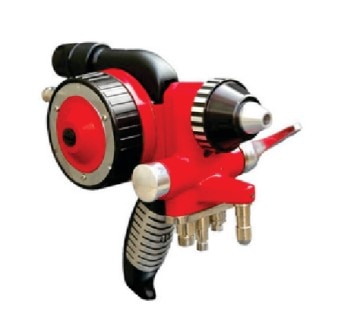 | Painting Equipment Supplier in India Rahul Industrial Products is a leading distributor, dealer, and supplier of high-quality Metal Spray Guns designed for precision... View product → |
Frequently asked questions
How can you verify an Ashoka spray gun dealer?
Ask the seller for current Ashoka authorisation and traceability documents, then match the quoted model and serial details to the supplied gun.
How do you match an Ashoka spray gun to a coating?
Compare the coating’s viscosity, solids content and required finish with the gun’s nozzle, air-cap and fluid-delivery configuration.
What should you check in an industrial spray gun system?
Inspect the compressor capacity, regulator, air and fluid hoses, filters, fittings and pressure settings as one complete system.
What should a spray gun demonstration include?
Request a documented test using your coating, target surface and operating pressures, then inspect the gun, seals, threads and serial number before acceptance.
How should you evaluate a spray gun dealer’s after-sales service?
Check local response times, technician support, replacement nozzles and seals, parts availability, warranty handling and maintenance guidance.