A regulator with the right-looking connection can still be undersized, poorly documented or incompatible with the cylinder, hose and equipment downstream. By the end, you will know which technical questions to ask, which documents to demand and how to judge a dealer’s stock, support and after-sales capability before installation.
Key takeaways
- Size the regulator for peak demand, gas type and inlet-pressure range.
- Match every cylinder, hose and equipment connection before ordering.
- Request model-specific datasheets, certificates, test reports and compliance documents.
- Confirm spare availability, lead times and technical support before purchase.
Ask the Dealer to Size for Demand, Not Appearance
An LPG regulator is correctly sized only if it maintains the required outlet pressure while gas demand changes. Ask the LPG regulator dealer to rate it for your actual gas, inlet-pressure range, outlet set pressure and peak consumption—not merely for its connection size or a nominal mass-flow figure.
Request these specific figures and documents:
- Flow capacity for propane, butane or the actual LPG mixture, at the stated inlet pressure and outlet set pressure
- Minimum and maximum inlet pressure, outlet pressure range, factory setpoint and maximum inlet pressure
- Allowable outlet-pressure droop at representative flow and at the equipment’s peak demand
- Lock-up pressure, relief setting, temperature range, exact model number and manufacturer datasheet
A correct thread does not prove adequate capacity. An undersized regulator can show normal pressure with no flow, then let outlet pressure fall when a torch, burner or spray booth starts drawing gas.
Ask the dealer to demonstrate no-flow pressure, representative-flow pressure and response to an expected demand change; a gauge reading alone is not proof unless it is compared with the equipment’s permitted range.
Before acceptance, leak-test every joint and confirm that downstream relief or shutoff devices operate as designed. If the dealer cannot show capacity at your gas and operating conditions, reject the selection and request a calculation or test result.
Check Every Connection from Cylinder to Equipment
Confirm compatibility by matching the complete gas path, not just the regulator’s nominal thread. Identify the cylinder-valve type, then verify the adaptor and regulator inlet connection for thread form, nominal size, gender, sealing method and orientation.
- Record whether each connection is NPT, BSP parallel, BSP taper, POL, ACME or a flange, and check the specified size and male or female gender.
- Confirm the regulator outlet thread matches the hose end, including its sealing method; do not treat a gasketed face, tapered thread or bonded seal as interchangeable with thread sealant.
- Check that the hose bore, pressure rating and end fittings match the regulator and the torch or burner. A forced adaptor can damage the regulator body or leak under load.
- Confirm the flow direction marked on the regulator and ensure the cylinder, adaptor, hose and appliance are arranged for vapour withdrawal or liquid LPG service as specified.
- Compare the regulator’s gas compatibility, maximum inlet pressure, required outlet pressure and rated capacity with the equipment’s peak consumption. A correct-looking connection can still starve a burner when demand rises.
- Ask whether diaphragms, seals and valve seats suit LPG, temperature and plant contaminants such as solvent vapours, compressor oil or corrosive atmospheres.
Do not use a liquid-LPG regulator on a vapour-withdrawal installation, or reverse that choice, without written manufacturer approval. If an incorrect connection needs force, extra sealant or an improvised adaptor, stop and obtain the exact approved fitting from the dealer.
Demand Model-Specific Documents and Compliance Evidence
Do not accept “LPG regulator” as identification. Require the manufacturer name, exact model number, datasheet and a test certificate that match the unit’s label, connection configuration, spring range and safety devices. A generic certificate for a product family does not prove that the proposed variant is approved.
Ask the dealer for:
- A manufacturer authorization statement or current distribution status.
- The original conformity or certification evidence for that model. For applicable installations, look for EN 16129, UL 144 or documentation addressing NFPA 58 provisions.
- The batch number, serial traceability and factory test record, where issued.
- The datasheet showing inlet and outlet connections, pressure range, capacity, gas compatibility, maximum inlet pressure, temperature range and factory setpoint.
- The stated flowing outlet pressure and lock-up pressure. Lock-up that rises too high can overpressure downstream hose, valves or burners.
- Warranty terms, genuine repair-kit details and invoice details identifying the supplied model.
| Evidence | What it proves | Reject it when |
|---|---|---|
| Model-specific certificate | The exact regulator design was assessed | It names only a broad product family |
| Batch number or serial traceability | The unit can be linked to production and test records | The label is missing, altered or unreadable |
| Datasheet and test certificate | Ratings and factory performance match the order | The documents show different pressure, orifice or safety configuration |
| Authorization and warranty terms | The dealer has a support route to the manufacturer | The seller cannot identify the warranty issuer or genuine spares |
Compare Regulator Designs and Verify Performance Safely
A single-meter regulator shows outlet pressure; choose it for straightforward, stable-demand equipment. A double-meter regulator shows inlet and outlet pressure, making it useful for cylinder manifolds, changeover systems and troubleshooting supply drop. Gauge location matters: read it from a safe position.
| Option | What it means | When it applies |
|---|---|---|
| Single-stage regulator | Reduces cylinder pressure to appliance pressure in one step | Small, steady loads with short pipe runs |
| Two-stage arrangement | First stage reduces tank pressure; second stage controls outlet pressure | Variable demand, long runs or continuous-duty equipment |
| Heavy-duty regulator | Higher capacity construction for sustained flow and demanding service | High-consumption burners, cutting or heating systems |
Do not select a heavy-duty regulator merely because it looks stronger; excessive capacity can make low-flow control difficult. The dealer must state the normal set pressure and lock-up pressure.
Set pressure is measured while gas flows at a specified load; lock-up pressure is the pressure after flow stops, and excessive lock-up can damage low-pressure hoses, valves or burners.
Acceptance testing should include:
- Test every joint with an approved leak-detection solution; never use a flame.
- Record outlet pressure at no flow and at representative flow, then test expected demand changes.
- Confirm downstream relief and shutoff devices operate at their specified settings.
- Check that the pressure gauge agrees with the test instrument; gauge indication alone does not prove safe pressure control.
- Ask whether the unit is serviceable. Replace diaphragms, seats or springs only with the manufacturer’s kit, procedure and test method.
Judge Stock, Spares and Support Before You Place the Order
A boxed regulator proves only that a unit reached you. A service-life-capable authorised dealer can identify whether the exact model is serviceable or replacement-only, then support repairs without altering its pressure behaviour.
1. Request current manufacturer authorization, the exact model number, batch or serial traceability, and the manufacturer’s certificate or declaration. A generic family certificate may not cover your spring range, orifice or safety configuration.
2. Ask for the regulator’s stock depth and replacement availability: diaphragm, seat, spring, gauges, seals and genuine repair kits. A similar-looking spring or seat can change set pressure and lock-up behaviour.
3. Confirm the repair procedure, test method and test equipment. Rebuilding is acceptable only when the manufacturer specifies the kit, procedure and final pressure test; otherwise replacement is safer than improvised repair.
4. Test technical support before ordering. Ask who will confirm gas compatibility, capacity at your actual inlet and outlet pressures, low-temperature operation, and overpressure protection when demand or ambient conditions change.
5. Get written warranty terms, expected spare-part lead times and an after-sales service contact. “Available on request” is not replacement availability.
Rahul Industrial Products is worth assessing against this checklist: compare its stated model, spares route and support process with the manufacturer’s records, rather than treating dealer status alone as proof. A dealer that cannot identify the diaphragm, seat and spring kit for your exact regulator is supplying a transaction, not a service-life plan.
Related products
 | Welding Regulators Reliable Gas Pressure Control for Safe and Efficient LPG Operations The LPG Regulator is an essential gas control device designed to regulate and... View product → |
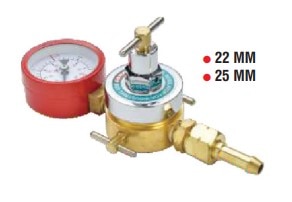 | Welding Regulators Reliable Gas Pressure Control for LPG-Based Industrial Applications The LPG Regulator Single Meter is a high-quality gas pressure regulating device... View product → |
Frequently asked questions
How should a dealer size an LPG regulator?
Ask the dealer to size it for your actual gas, inlet-pressure range, outlet set pressure and peak consumption. Connection size and nominal flow alone are not enough.
What connections should you check on an LPG regulator assembly?
Check the cylinder valve connection, inlet and outlet sizes, thread standards, hose fittings and the equipment connection. Confirm that seals and adapters suit LPG service.
Which documents should an LPG regulator dealer provide?
Request the exact model datasheet, operating limits, installation instructions, test or calibration records and applicable compliance evidence. Match every document to the supplied model.
How can you compare LPG regulator designs safely?
Compare single-stage and two-stage designs against the required pressure stability, flow range and installation conditions. Verify performance using the manufacturer’s test method and never adjust a pressurised system unsafely.
What support should you confirm before ordering?
Ask about stock, lead time, replacement diaphragms, seals, gauges and other model-specific spares. Confirm who provides commissioning guidance, troubleshooting and warranty service.
Related products
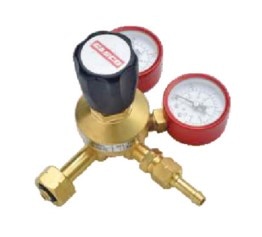 | Welding Regulators High-Precision LPG Pressure Regulator for Safe and Efficient Gas Control The LPG Regulator Double Meter is a premium-quality gas pressure regulating... View product → |
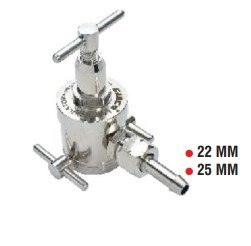 | Welding Regulators Heavy-Duty LPG Pressure Regulator for Industrial Applications The LPG Regulator (Heavy) is a robust and high-performance gas pressure regulating... View product → |
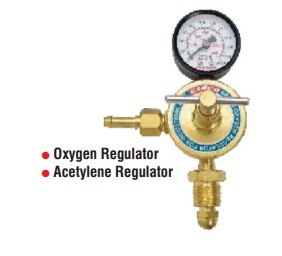 | Welding Regulators Efficient Gas Pressure Regulator for Industrial Applications The Single Meter Regulator is a reliable gas pressure control device designed to... View product → |
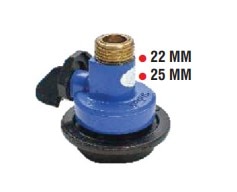 | Welding Regulators Reliable Connection Solution for LPG Gas Systems The LPG Adaptor is a high-quality gas connection accessory designed to provide a secure and... View product → |