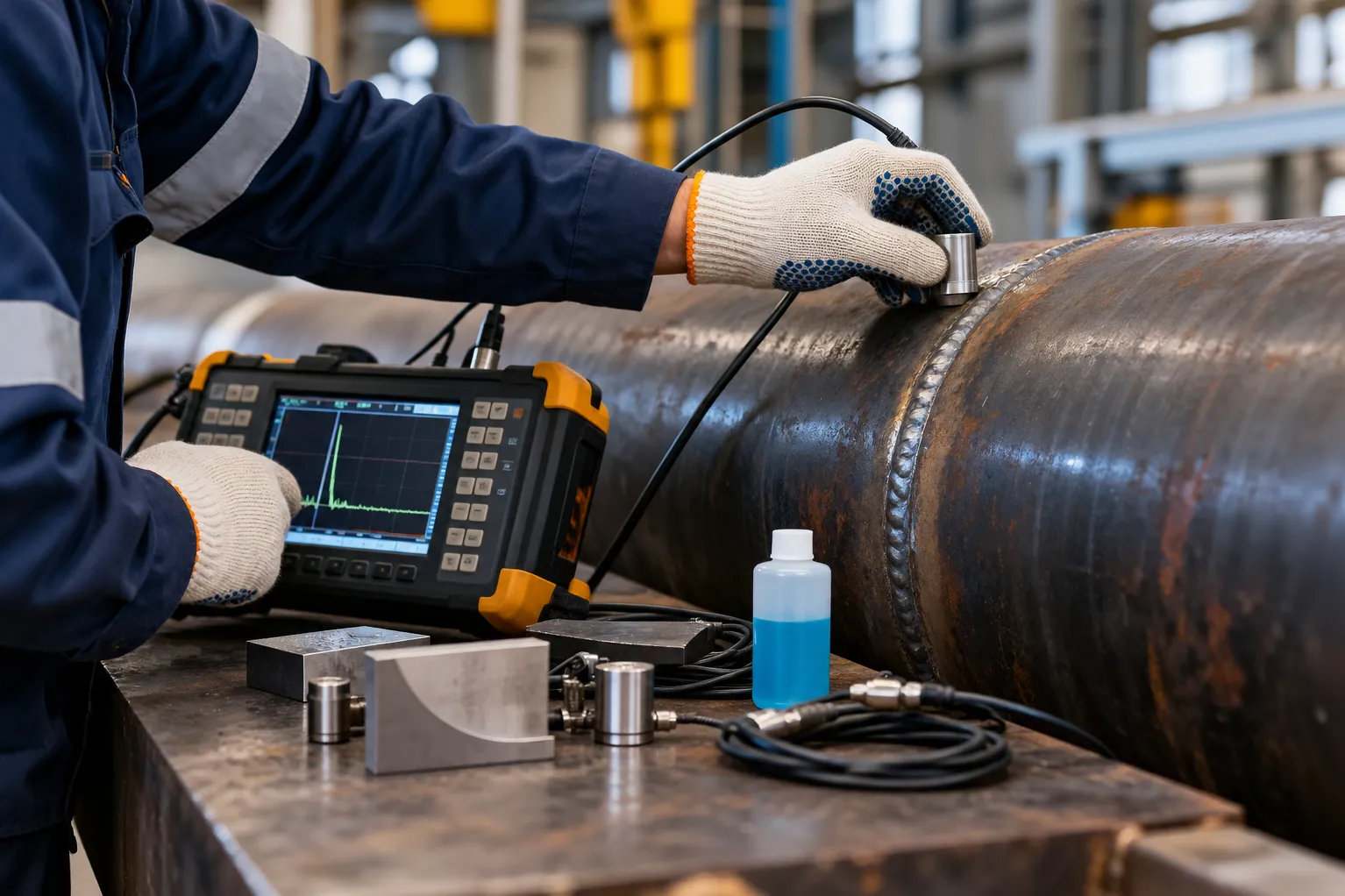
Non-destructive testing helps industries evaluate materials, welds, components, and structures without unnecessarily damaging the item being examined. Since inspection requirements vary significantly, selecting an NDT Equipment Supplier should begin with the testing method and applicable inspection procedure rather than with a generic equipment catalogue.
For fabrication and heavy engineering companies in Bhosari, Maharashtra, NDT can form an important part of quality assurance where weld integrity, material condition, and component reliability need to be assessed.
Identify the Required NDT Method
Different testing methods detect different types of discontinuities and have their own limitations.
Common NDT approaches can include ultrasonic testing, magnetic particle testing, dye penetrant testing, and other techniques appropriate to specific inspection requirements.
The correct method depends on factors such as material, component geometry, expected discontinuity, accessibility, surface condition, and applicable code or inspection procedure.
Match Equipment With the Procedure
Purchasing an instrument should follow a defined inspection requirement.
Before approaching a supplier, determine:
- NDT method required
- Material being inspected
- Component dimensions
- Expected inspection conditions
- Applicable procedure
- Required instrument capabilities
- Accessories needed
- Documentation requirements
This allows equipment options to be evaluated against actual inspection work.
Calibration Requirements Matter
Measurement and testing equipment may require calibration, verification, or periodic checks according to the applicable quality system, procedure, manufacturer guidance, and industry requirements.
Procurement managers should therefore ask about calibration-related documentation where relevant and understand how future calibration needs will be handled.
Accessories Can Be Equally Important
An NDT instrument may depend on probes, cables, consumables, reference blocks, inspection media, batteries, chargers, and other accessories.
Availability of these supporting items can influence long-term equipment usability.
A buyer evaluating only the primary instrument price may overlook recurring operational requirements.
Technical Support Improves Procurement
Rahul Industrial Products serves industrial customers looking for equipment used across manufacturing, fabrication, maintenance, and inspection activities.
When evaluating an NDT supplier, businesses should look for a provider that can understand the intended inspection application and help identify suitable equipment categories without making unsupported claims about inspection results.
Operator Competence Remains Essential
Equipment alone does not establish inspection reliability. NDT work should be performed according to applicable procedures by appropriately qualified personnel where required.
Interpretation of indications can require technical competence, experience, and compliance with relevant standards.
For procurement teams, this distinction is important. Buying capable equipment is only one part of building an effective inspection process.
A suitable NDT equipment provider should support specification-based purchasing, documentation requirements, compatible accessories, and long-term equipment usability. Evaluating these points before placing an order can help quality teams select equipment that fits established inspection procedures instead of adapting procedures around an unsuitable instrument.
Keywords